Marijuana is a major talking point for a lot of people, with more and more supporting marijuana than ever before, and a lot of research being done on their uses and therapy for this. A lot of modern views on this are basically a cry from the hatred of the past, and this attributes to the breakthroughs that are in place on the utilization of marijuana, offering a radial and huge discovery of the endocannabinoid system, along with the effects. But what is the endocannabinoid system? We’ll discuss this here.
The System at its Core
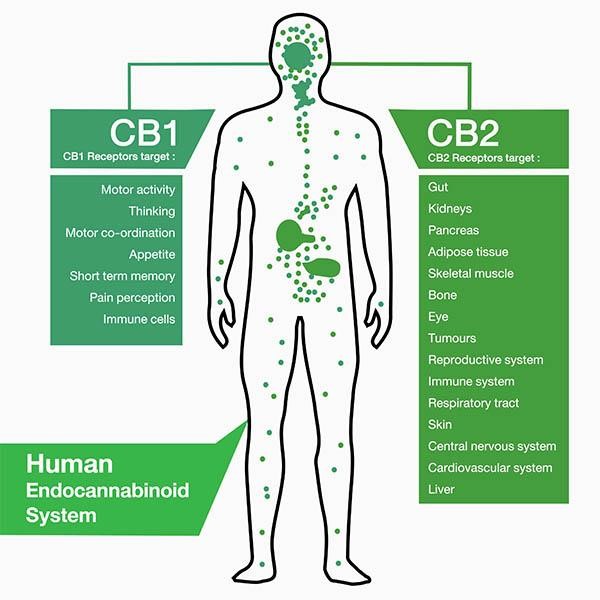
Basically, this is a system of different receptors that are found within the body, specifically the nervous system. The receptors are both CB1 and CB2 receptors, and both are found in a variety of places in the body.
The CB1 receptors originally were assumed to be a part of the brain, while the immune system housed the CB2r receptors. This has since been disproved by research, since these endocannabinoid receptors are basically all over the place.
They are basically made up of what’s called trans-membrane protein, which for those us who have no idea what that is that the protein basically binds to the different molecules that are out of the cell wall, sending signals within the cell. The CB1 and CB2 receptors are linked to a ton of vital pathways, and the effects do differ based on the binding of the endocannabinoid to the receptor of choice.
The Effects
These effects are seen throughout your body from the mental process to even how you feel physically, and it can help with neurodegeneration, the immunity of your body, and can effect the growing of tumors in the body.
This is something that’s recently gotten a bunch of research. Some people have found that the CB2 receptors especially in your immune cells, offer a ton of effects, and the effects have grown clearer in some cases. Rheumatoid arthritis and other therapies have since also been discovered as well to benefit from this, along with neuropathy as well.
These receptors also do have an effect on your mental state too, since it does control the hunger of the body, helps with brain help, and also does help to activate sleep. The pathways can be antagonists to each other, and it can actually impact both the increase and the decrease of the chemicals within your receptors.
The Future research
This is something that’s recently progressed a lot in just 80 years. It was isolated all the way back in 1964, and since then, the receptor was later found in 1988 within rats. Then, in 1993 it was found that other cannabinoid receptors were also discovered, with more and more research offering new treatments and ways to use the system to help benefit a person.
There is also some research which depicts that some cancers, MS, Parkinson’s, and the like also can benefit, and one study even found that plaque found in Alzheimer’s and also atherosclerosis was also discovered to benefit from the engaging of these receptors.
Right now though, these systems are still being studied, but what we can extrapolate from this is that the effects are more varied and reach further than before and they target a bunch of different processes, both clinical along with therapeutic, and there are different mechanisms that do work behind the scenes in order to properly control this.

A lot of people can benefit from it, and we do believe the research is something that’ll also grow immensely as time goes on, and as more people are studying it.
 Tech Raptor